Sourdough Bread
Sourdough bread is one of the oldest forms of leavened bread in history. Known for its tangy flavor, chewy texture, and crisp crust, sourdough is made using a natural fermentation process rather than commercial yeast. Its origins stretch back thousands of years, and it remains popular among bakers and foodies like myself who appreciate its traditional methods and unique taste.
The history of sourdough bread dates back to ancient civilizations. Evidence suggests that natural fermentation was discovered around 1500 BC in ancient Egypt. According to historians, a mixture of flour and water was likely left sitting long enough to capture wild yeast and bacteria from the environment. These microorganisms caused the dough to ferment, producing gas bubbles that made the bread rise. This process created a lighter, more flavorful bread compared to the flatbreads that had been common before.
From Egypt, sourdough bread making spread across the Mediterranean and into Europe. The Greeks and Romans adopted the technique and began refining it. Roman bakers developed early forms of organized bakeries and shared knowledge of fermentation. Over time, sourdough became a staple throughout Europe, where bakers maintained their own starters fermented mixtures of flour and water that contained living yeast cultures.
Sourdough also played a notable role in North American history. During the 19th century, sourdough became especially important during the California Gold Rush. Prospectors carried sourdough starters with them because commercial yeast was not readily available. These miners were sometimes even nicknamed “sourdoughs” because of their reliance on the bread. The cool climate of San Francisco helped cultivate unique strains of bacteria and yeast, contributing to the famous tangy flavor of San Francisco sourdough.
Unlike bread made with packaged yeast, sourdough relies on a wild yeast and lactic acid bacteria that live naturally in the air. These microorganisms develop naturally when flour and water are combined and allowed to ferment over time.
The wild yeast produces carbon dioxide, which causes the dough to rise. Meanwhile, the bacteria produce lactic and acetic acids that give sourdough its distinctive tangy taste. This fermentation process also strengthens gluten structure and improves the bread’s texture.
Another benefit of sourdough fermentation is improved digestibility. The long fermentation helps break down some of the gluten and acids in the flour. As a result, some people find sourdough easier to digest compared to conventional bread. We have also found if you freeze sourdough after cooking it changes the glycemic index so if you have diabetes it can be less impactful on your sugars.
Although many people think of sourdough as a single type of bread, there are numerous variations around the world. Differences in flour, climate, fermentation time, and baking techniques all influence the final result.
San Francisco sourdough is perhaps the most famous variety in the United States. It is known for its pronounced sour flavor and chewy crumb. The unique tang comes from specific strains of bacteria that thrive in the region’s climate. Traditionally, it is baked into round loaves with thick, crackly crusts.
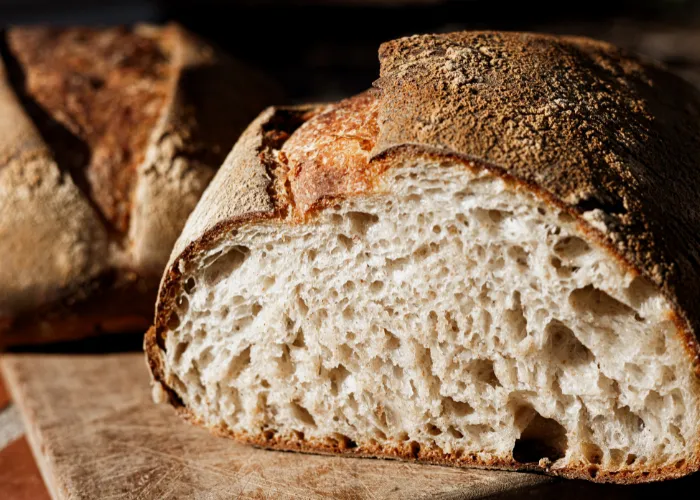
In France, sourdough bread is often calledpain au levain, meaning “bread made with natural leaven.” This bread typically has a milder flavor compared to American sourdough. It is commonly baked in rustic round or oval shapes and features an open crumb with irregular holes.
Germany has a long tradition of sourdough baking, especially with rye flour. Rye sourdough breads are denser and darker than wheat sourdough loaves. They often have a deep, earthy flavor and may include seeds such as caraway or sunflower.
Italian sourdough uses a starter known aslievito madre. This starter is often maintained as a stiff dough rather than a liquid mixture. Italian sourdough breads tend to have a softer crust and a slightly sweet flavor compared to other sourdough styles.
Whole wheat sourdough incorporates whole grain flour, giving the bread a nutty flavor and higher fiber content. Because whole wheat flour absorbs more water and ferments differently than white flour, bakers often adjust hydration and fermentation time.
Some bakers combine traditional baguette techniques with sourdough fermentation. The result is a long, slender loaf with a crisp crust and a mild tang. This style blends the airy texture of baguettes with the complexity of sourdough flavor.
Southern Sourdough like the one we make at home uses a potato flake starter. Based on Amish Friendship Bread. Potato flake starter is made by fermenting potato flakes, sugar and water, it’s designed for sweet, soft sandwich breads.
Sourdough has grown significantly in recent years. Many bakers enjoy the hands-on process of maintaining a starter and watching dough slowly ferment. The bread’s complex flavor and artisanal appearance also appeal to people seeking foods made with traditional techniques.
Additionally, sourdough bread often contains only three or 4 basic ingredients: flour, water, and salt (sometimes sugar). This simplicity fits well with modern interest in minimally processed foods.
Starter
Ingredients:
1 cup warm water (roughly 110’ - 115’)
3 Tbsp Instant Potato Flakes
1/2 cup Sugar (We use Golden Sugar)
1 packet
Methoid:
Mix: In a 1-quart glass jar or container, combine all ingredients. Stir well until the sugar dissolves.
Ferment (Days 1–4): Cover loosely with a cloth, paper towel, or a lid that allows air to escape (do not seal tightly). Leave at room temperature for 3–5 days, stirring once daily.
Feed (Day 5): Feed the starter with 1 cup warm water, 1/2 cup sugar, and 3 Tbsp potato flakes. Mix well and let it sit out for 8–12 hours until bubbly and active.
Use or Store: Take 1 cup out to bake, and put the remaining starter in the refrigerator.
Bread
Ingredients
150g/ 5.35 oz bubbly, active Starter
250g/ 8.80 oz warm water, preferably filtered
25g/ .90 oz olive oil
500g/ 17.65 oz bread flour
10g/ .4 oz fine sea salt
fine ground cornmeal or parchment paper
For best results, weigh ingredients Because measuring cups vary in size and shape, they are not accurate for bread baking. You want the flour to water ratio to be correct!
For a more soft dough, you can increase the water up to 300 g- 325 g total. Please use a cloth lined bowl (instead of the Dutch oven) for the second rise.
You will need a 5 1/2 or 6 quart Dutch oven or 2 loaf pans for baking
Instructions
Feed the starter (10am day 1)
Make The Dough (3pm day 1)
In a large bowl, add the Starter, water and olive oil. Mix with a fork to combine. Add the flour and salt. Continue mixing with your fork until the dough becomes stiff. Then squish everything together with your hands to incorporate all of the four. The dough will be dry and shaggy. Cover the bowl with plastic wrap, reusable wrap or a clean, very damp kitchen towel. Let rest over night
Rise (11am Day 2)
Turn the dough out on a flat flowered surface, kneed for a few minutes
Put in lined dutch oven ot loaf pans
Now the dough needs to rise. Let rest in a warm spot to rise
let rest for 3 to 12 hours
Rest (2pm Day 2)
Bake The SourdoughLoaf
Place into pre-heated 350’ F oven on the center rack Bake for 30 to 40 minutes until deep, golden brown.
Bake The Crusty Sourdough
Score The Dough
Preheat your oven to 450º F Place dutch oven with lid on center rack bake for 15 minutes.
Right before your bread goes into the oven, make a shallow slash about 2-3 inches long in the center of the dough. The cut should be about 1/4-inch deep.
Bake The Dough
Place the bread into the dutch oven, on the center rack (lid on) and reduce the temperature to 400° F Bake for 20 minutes. Remove the lid, and continue to bake (uncovered) for an additional 40 minutes or until deep, golden brown.
Cool the Bread
Remove the bread from the oven, and cool on a wire rack for at least an hour before slicing. Don’t cut too soon or else the inside will have a gummy texture!